Rust, How JTeles Turned 126,000 Cloth Into a 20,000,000-Cloth Megafarm in One Wipe
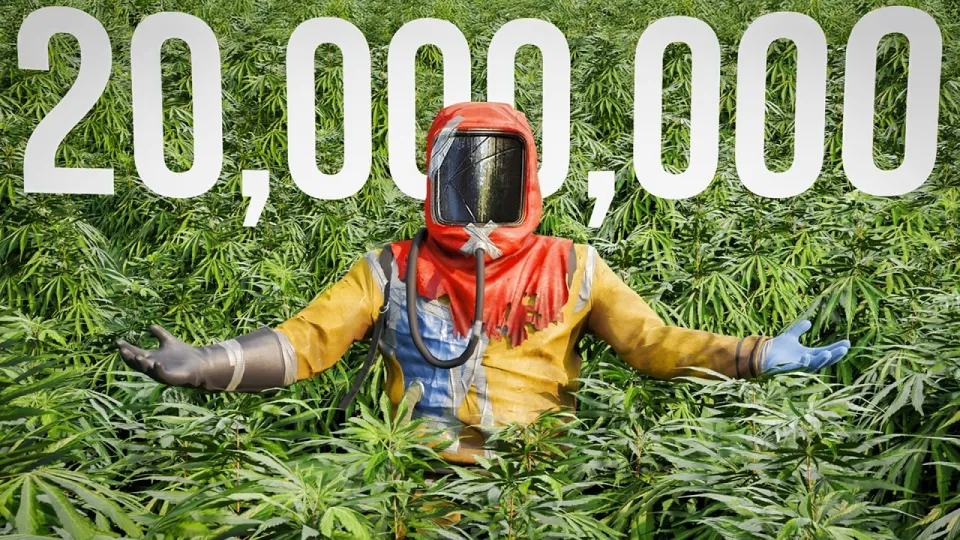
Video: I Became Rust's #1 Farmer...
Want articles like this for your own video to promote it on YouTube and Google? Order them through the Telegram bot @sat_sit_bot. It writes articles around your video, embeds the video and publishes them on popular niche websites (no ads). Try it free: 50 articles on us.
· based on the channel JTeles
Key takeaways
- JTeles started the wipe with 126,000 cloth and set a target of 20,000,000 cloth before the wipe ended.
- The goal had to be reached in 7 days, with viewers invited onto the server to farm and defend.
- The build became what the creator calls the biggest cloth farm in Rust, large enough to lag the server.
- A large Russian clan learned of the project and attacked it, producing PvP, raids and base defense.
- Clanmates held the compound while JTeles was offline, which the audience singled out as decisive.
Rust farming at the top level is a numbers game, and JTeles set the numbers himself: start with 126,000 cloth, finish the wipe with 20,000,000 cloth, and do it in seven days. The run became a full server event — viewers were invited in to farm and defend, a compound grew into what the creator calls the biggest cloth farm in Rust, and a large Russian clan tried to flatten it before the target was hit. Anyone who wants to follow the same sponsored route into War Thunder can grab the bonus through the War Thunder registration link.
What the 20,000,000 cloth challenge actually required
A cloth target of 20 million is not a solo grind, it is an industrial project with a schedule. Cloth in Rust comes from hemp plants grown in planters, so the math runs through planter count, grow time and harvest cycles rather than through raw playtime. To land 20 million within a single wipe, the farm has to be running almost continuously, which means the real bottleneck is not planting but labor: someone has to harvest, someone has to move the yield, and someone has to keep the base standing while all of that happens. JTeles solved the labor problem by opening the server to his audience, turning a personal goal into a shared one. The starting stock of 126,000 cloth is small enough to look like a rounding error next to the target, and that gap is the whole point of the challenge.
The biggest cloth farm in Rust and the lag it caused
The compound grew past the point where it was just a base and became infrastructure. Viewers noticed that simply looking at the finished farm dropped the server's performance — a sign of how many entities, planters and lights had been stacked into one area. That scale is exactly what makes a cloth megafarm work and exactly what makes it a target. A farm that size is visible from across the map, it cannot be hidden, and it cannot be packed up and moved overnight. Once the build was up, the project stopped being a farming video and became a siege story.
The clan war that nearly ended the run
A large Russian clan found out what was being built and committed to stopping it. The result was a week of PvP, raids, base defense, alliance politics and general chaos across the server, with the farm itself as the objective. What makes this part unusual is the timing problem: a 20-million cloth goal forces the owner to spend most of the wipe farming, which leaves the base exposed while he sleeps. The clan members and viewers who held the compound during offline hours carried the run — defending, repairing and rearming while the person who set the goal was not even logged in. Without that coverage, the megafarm would have been wiped long before the counter reached its target.
How to attempt a cloth megafarm yourself
Scaling cloth production is mostly planning, and the same principles apply whether the goal is 2 million or 20 million.
- Set a hard number and a deadline. A target without a wipe date is just a hobby; the 20,000,000-in-7-days framing is what forces decisions about planter count.
- Build the planter bank before anything else. Every planter needs water, light and space, and the layout should be decided before the first seed goes in.
- Split roles. Planters, harvesters, haulers and defenders are different jobs; a single player doing all four is the reason most farms stall.
- Recruit trustworthy help. Opening the server to viewers worked because the extra hands were also extra guns when the raid came.
- Expect attention. A farm that lags the server when you look at it will attract raiders, and the defense plan needs to exist before the first attack, not after.
Questions viewers keep asking about the run
Most of the discussion around the video circles the same few points: whether 20 million cloth is even a sane goal, how the compound survived while its owner was offline, and how much of the total came from the farm itself versus trading and looting. The honest answer to all three is that the megafarm was only half the achievement — the other half was the group of people who showed up to keep it alive. The audience also picked up on smaller details, like the cable management in the build and the sheer absurdity of a player stepping outside for the first time since wipe day.
All links from the video
- War Thunder PC and console bonus: https://wtplay.link/jteles
- War Thunder mobile: https://wtm.game/jteles
- JTeles Discord: https://discord.gg/jteles
- Twitter/X: https://twitter.com/xJTeles
- TikTok: https://www.tiktok.com/@xjteles
Final thoughts on Rust's cloth race
The 126,000-to-20,000,000 cloth run works as a case study in how Rust rewards organization over raw hours. One player set the goal, but the farm only survived because a clan and a crowd of viewers treated it as their own project, farming, defending and repairing around the clock. The Russian clan's campaign to stop the build turned a spreadsheet exercise into a week of raids and base defense, and the server lag from the finished compound is the clearest proof of scale. JTeles documented the whole thing on his channel, and the video breakdown is worth watching for anyone planning a megafarm of their own. If you want to try the sponsored game from the intro, use the War Thunder sign-up link to claim the bonus.
Source: I Became Rust's #1 Farmer... · Markdown version
Questions & answers
How much cloth did JTeles start with in the challenge?
The run began with 126,000 cloth already in hand, and the goal was to reach 20,000,000 cloth before the wipe ended. That is roughly a 160-fold increase in a single wipe, which is why the project needed a dedicated farm and a team rather than solo grinding.
How long did the 20,000,000 cloth goal take?
The target was set for 7 days, one full wipe cycle. Because planters only produce on a growth cycle, hitting the number required near-continuous harvesting and a large enough planter bank to keep the counters moving day and night.
Who tried to stop the farm?
A large Russian clan discovered the project and spent the wipe attacking it, which led to raids, PvP fights, base defense and alliance maneuvering across the server. The farm became the objective of the conflict rather than a background activity.
How did the base survive while JTeles was offline?
Clanmates and viewers who had joined the server held the compound during offline hours, defending and repairing it while the farm kept running. Their coverage is widely credited as the reason the megafarm was not wiped before the goal was reached.